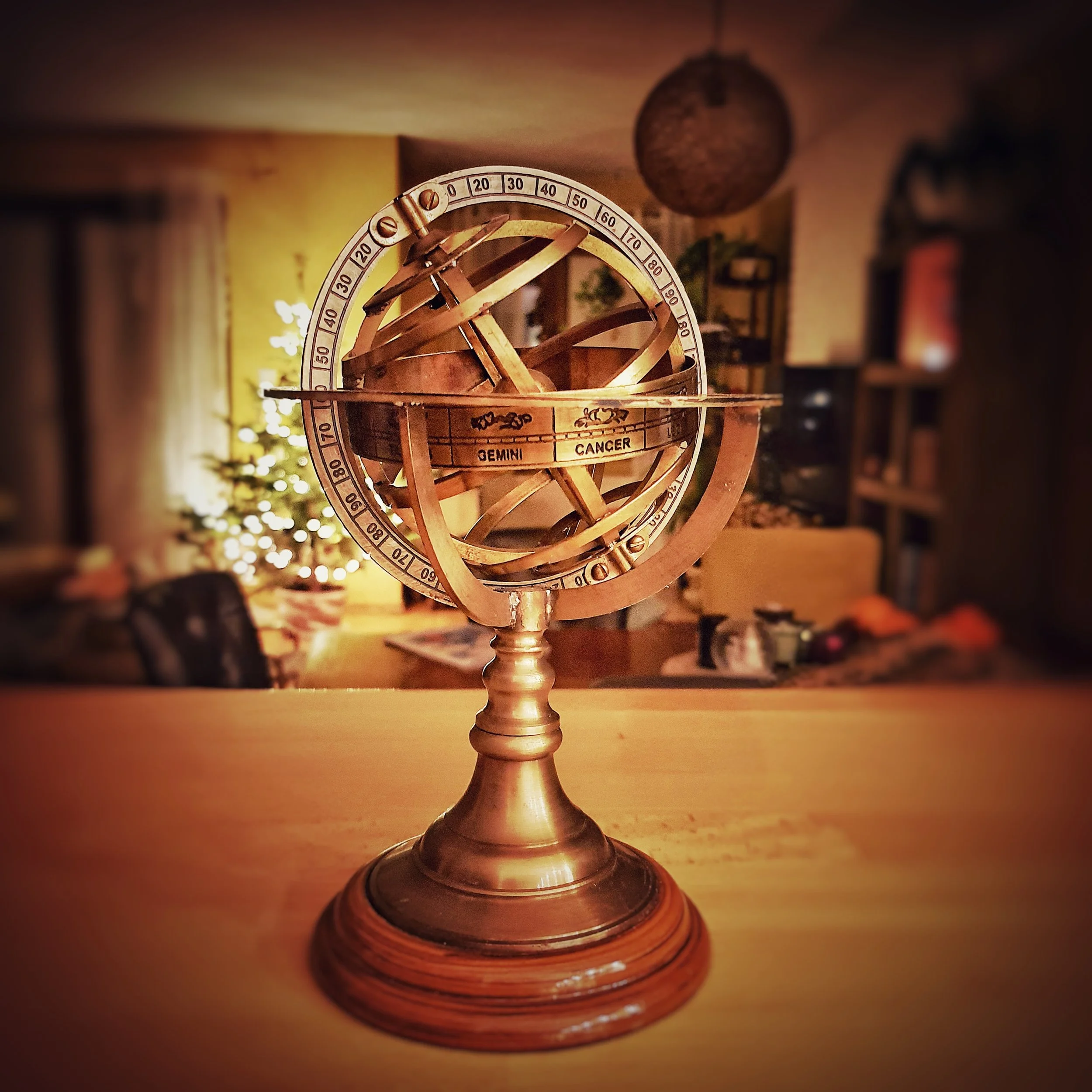
Armillary Sphere
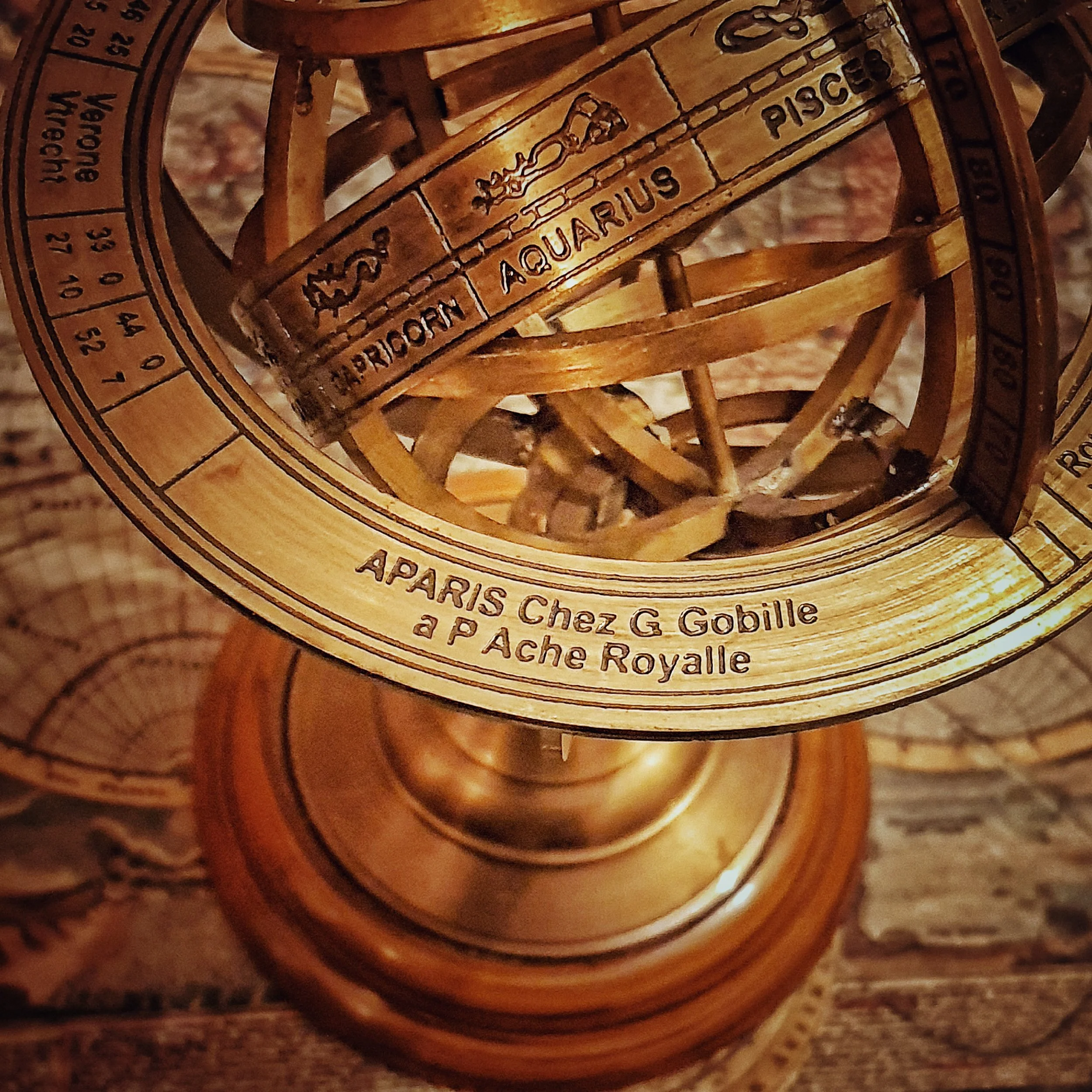
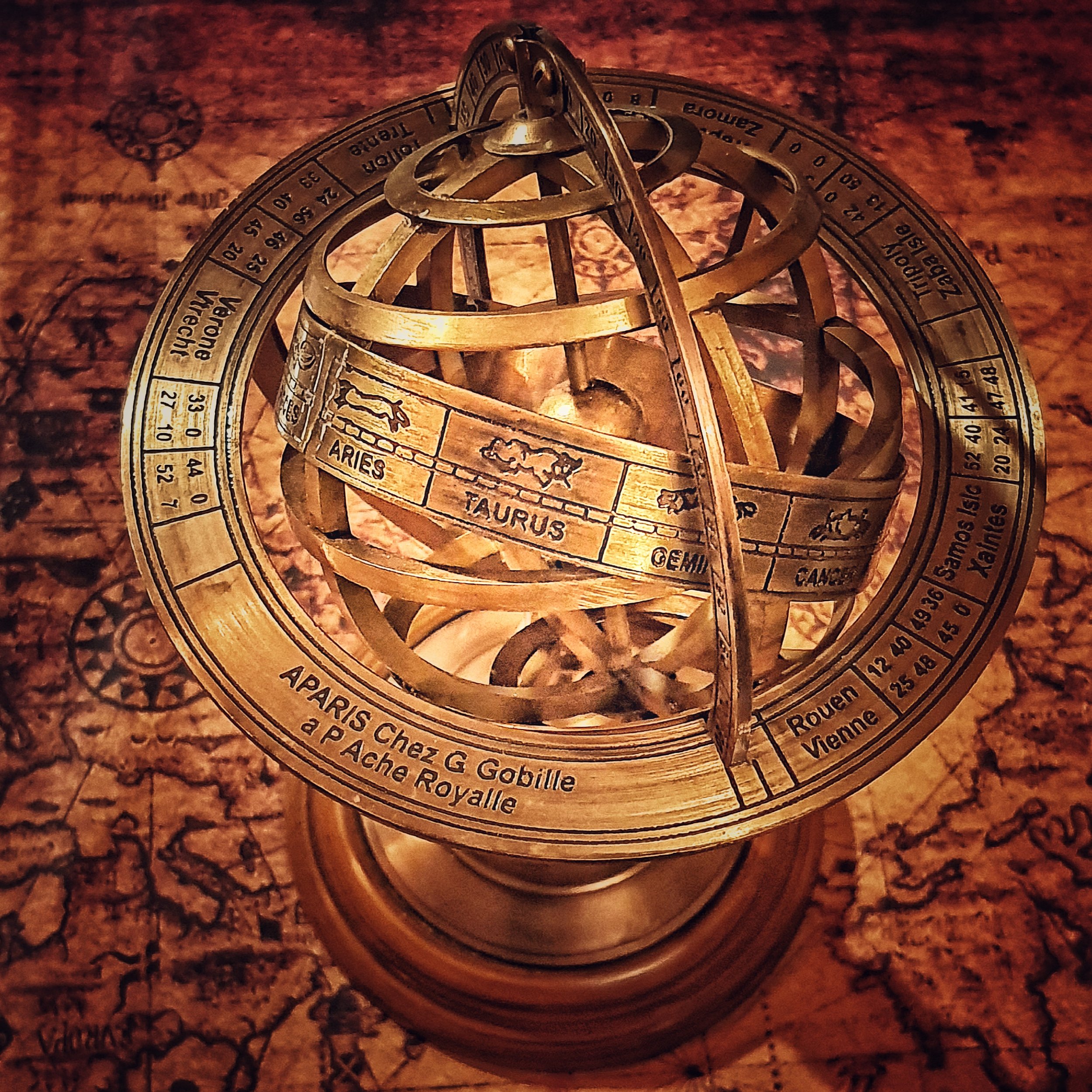

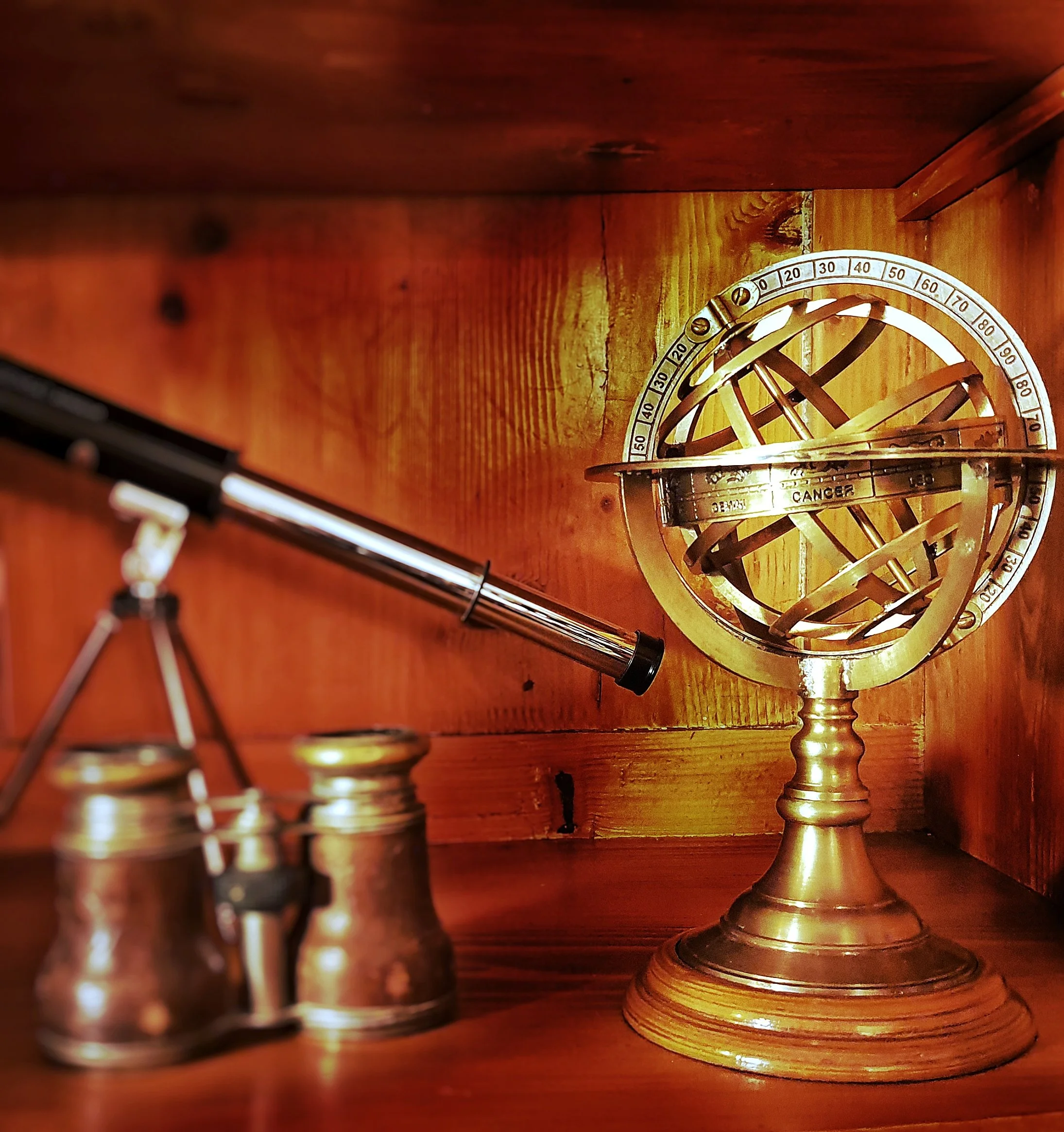
Armillary Sphere
Armillary spheres date back to the ancient world, with the first ones dated as far back as 200 BC, and they were certainly used by the 2nd-century astronomer and mathematician Claudius Ptolemy of Alexandria (100 AD). It was a mathematical instrument designed to demonstrate the movement of the celestial sphere about a stationary Earth at its center.
The concept of the celestial sphere was fundamental to astronomy from Antiquity through the Middle Ages and into the early Modern era. At the center of the sphere is the Earth. In this model, the Earth is stationary, and it is the celestial sphere that rotates around it, serving as a reference system for locating celestial bodies, such as stars, from a geocentric perspective.
The sphere is a skeleton celestial globe, with circles divided into degrees for angular measurement and representing the great circles of the heavens, including, in the most elaborate instruments, the horizon, meridian, Equator, tropics, polar circles, and an ecliptic hoop.
Each of the signs of the zodiac is engraved upon the ecliptic ring, which is also calibrated with a calendar scale, enabling the instrument to be used to model the apparent motion of the sun and the stars at any time of the year. The instrument could be used not only to model the movements and relative geometry of the heavens, but also to carry out various calculations, such as determining the times of sunrise and sunset, the length of a day, and the altitude of the sun or stars.
Beautifully crafted, made of solid brass with a wooden stand
Please watch the Video to see the rotation.
would be a great decorative addition to any enthusiastic collector
The item is antiquated, not an antique.
Measurements:
Height: 22 cm
Sphere Diameter: 15cm
Base Diameter: 11 cm
Item Weight: 750gr

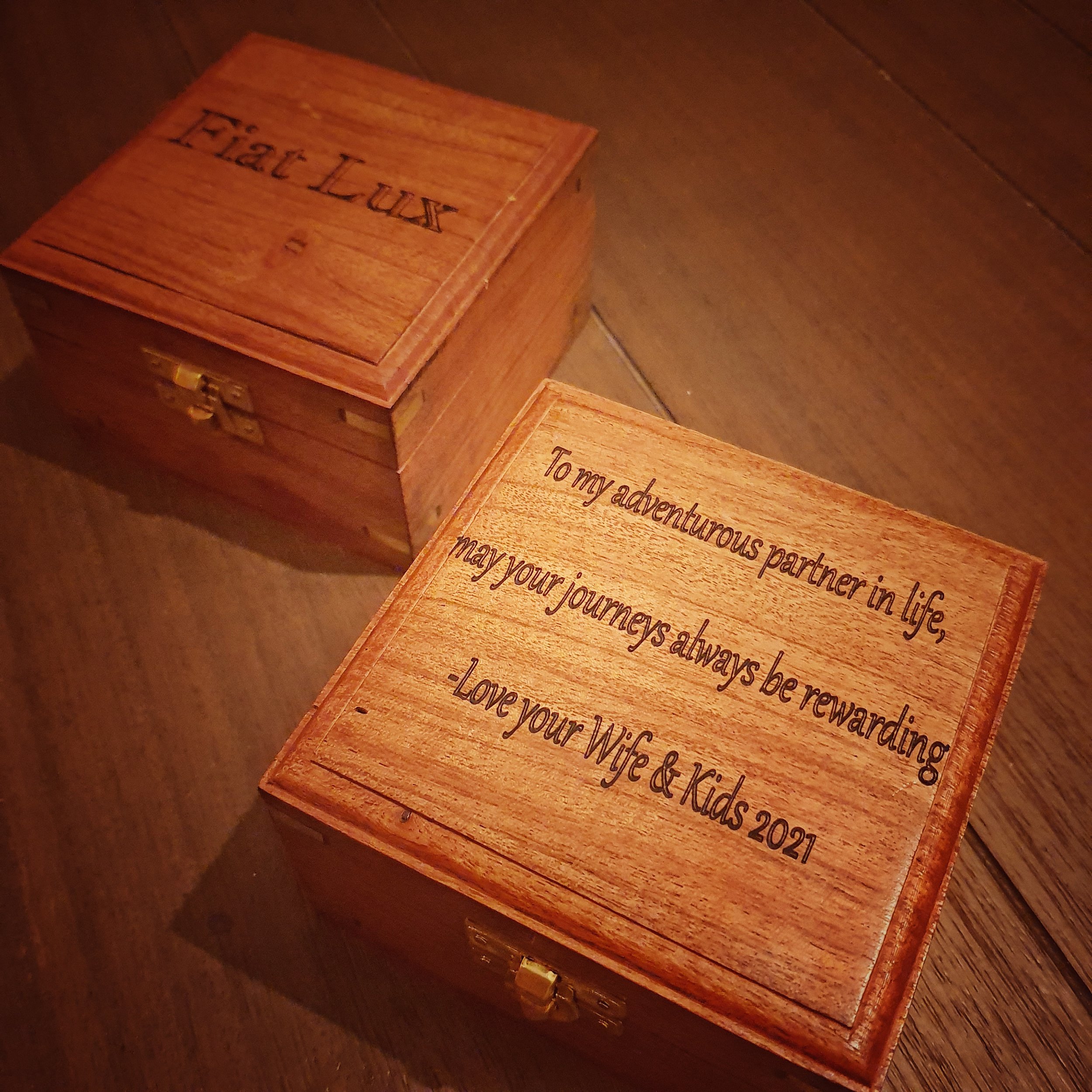






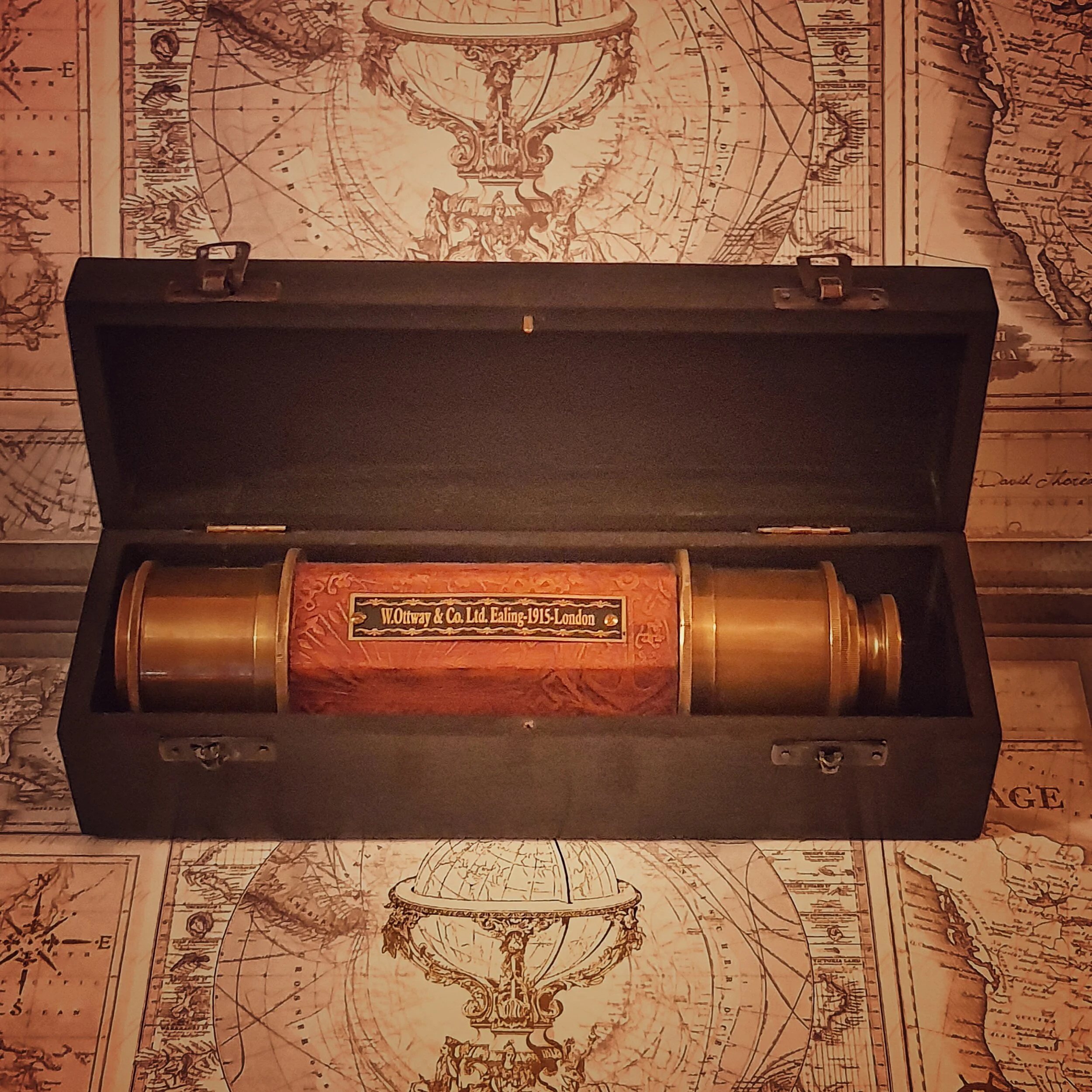


Brass Sextant with Compass - J SCOTT LONDON -1753 with Hardwood Box
A sextant is a doubly reflecting navigation instrument that measures the angular distance between two visible objects.
The primary use of a sextant is to measure the angle between an astronomical object and the horizon for the purposes of celestial navigation.
Making this measurement is known as sighting the object, shooting the object, or taking a sight.
The angle, and the time when it was measured, can be used to calculate a position line on a nautical or aeronautical chart.
A common use of the sextant is to sight the sun at noon to find one's latitude.
This is a replica of Original Sextant, all parts are moving, can be used for basic observation or suitable for collectors
Item is antiquated not an antique
Sextant measurements: 13cm(L) x 12cm (W) x 7cm( H)
Weight : 475 gr
Size of Box : 15cm (L) x 14cm( W) x 8cm (H)
Gross weight: 970
Fun Fact: Jim Lovell demonstrated on Apollo 8 that sextant navigation could return a space vehicle home. A tool that has helped guide sailors across oceans for centuries is now being tested aboard the International Space Station as a potential emergency navigation tool for guiding future spacecraft across the cosmos
✦ ✦ ✦ Thank you for visiting my shop! ✦ ✦ ✦
Shipping & Delivery:
Our company now operates from Poland, so delivery times may be longer for UK customers and generally shorter for EU customers. Shipping times to the rest of the world remain unchanged.
Orders are usually dispatched within 1–3 business days.
Please note that courier delays and any customs or import charges are beyond our control.
If you have any questions, feel free to contact us — we’ll be happy to help.